What is Trauma-Informed Therapy
Trauma-informed therapy recognises how trauma can affect the mind, body and nervous system. Learn what trauma-informed therapy is, how it differs from traditional therapy, and the evidence-based approaches that can support recovery.

Lisa Arnold
Clinical Psychologist & Director
Understanding Trauma-Informed Therapy
A Safe, Compassionate Approach to Healing from Trauma
Every person's experience of trauma is unique. That's why there is no single approach that works for everyone.
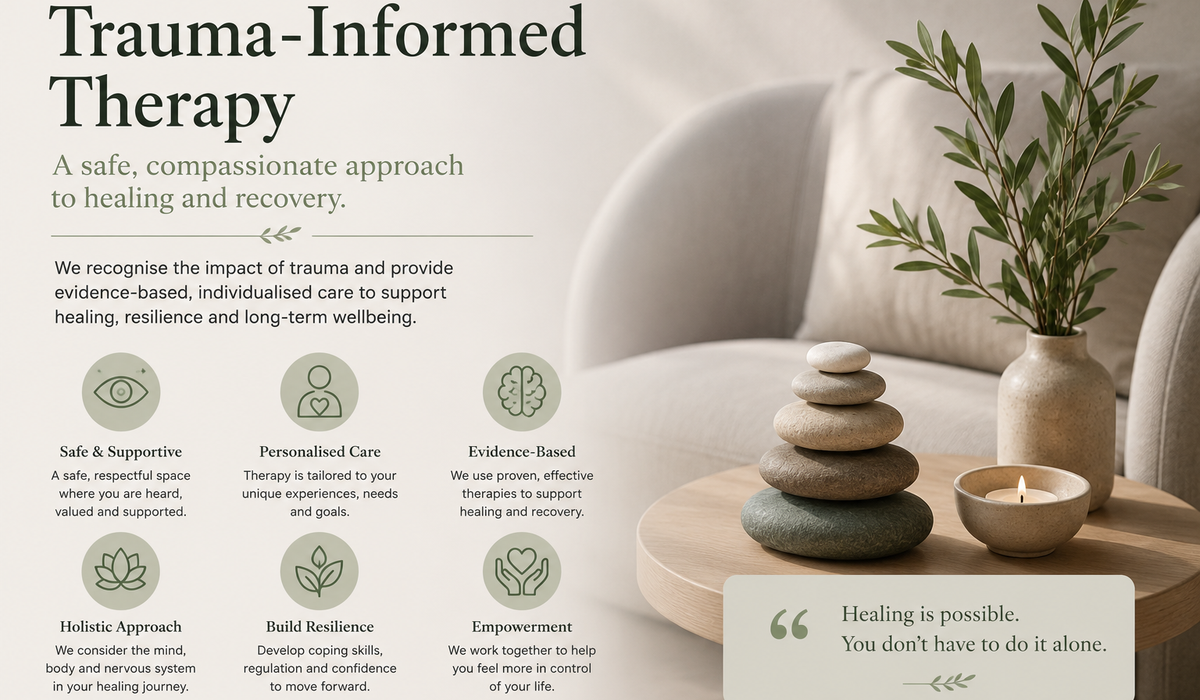
Trauma-informed therapy is not one specific type of therapy. Instead, it is an approach that recognises the lasting effects trauma can have on a person's thoughts, emotions, behaviours and nervous system. It focuses on creating a safe, supportive environment where therapy progresses at a pace that feels right for you.
Rather than asking "What's wrong with you?", trauma-informed therapy asks "What has happened to you?" This shift helps foster understanding, compassion and recovery.
What is trauma-informed therapy?
Trauma-informed therapy recognises that trauma can influence how people experience relationships, emotions, memories and everyday life.
Treatment is tailored to each individual and aims to help people:
- Feel emotionally and physically safe
- Understand their trauma responses
- Develop practical coping strategies
- Build emotional regulation skills
- Process traumatic memories when appropriate
- Rebuild confidence and resilience
Not everyone who has experienced trauma needs to revisit difficult memories immediately. Building safety and stability is often the first step.
Evidence-based approaches
At Picton Psychology, therapy is tailored to your individual needs, goals and preferences. Depending on your circumstances, your clinician may draw on one or more evidence-based approaches, including:
Eye Movement Desensitisation and Reprocessing (EMDR)
EMDR helps the brain process distressing memories so they become less emotionally overwhelming. It is widely recognised as an effective treatment for trauma and PTSD.
Cognitive Behavioural Therapy (CBT)
CBT helps identify and change unhelpful thinking patterns and behaviours that may develop following traumatic experiences.
Trauma-Focused Cognitive Behavioural Therapy (TF-CBT)
TF-CBT combines trauma-sensitive interventions with cognitive behavioural strategies to help people process trauma safely while building practical coping skills.
Cognitive Processing Therapy (CPT)
CPT helps people recognise and challenge beliefs that may have developed following trauma, supporting healthier ways of thinking and reducing ongoing distress.
Narrative Therapy
Narrative Therapy helps people explore their experiences, recognise personal strengths and reshape the way trauma influences their life story.
Mindfulness-Based Strategies
Mindfulness can help increase awareness of thoughts, emotions and physical sensations while supporting nervous system regulation and emotional wellbeing.
Your clinician may also integrate other evidence-based approaches where appropriate, ensuring therapy is personalised to your unique circumstances and recovery goals.
How trauma-informed therapy can help
Trauma-informed therapy aims to help you:
- Feel safer in your daily life
- Better understand your trauma responses
- Reduce the impact of distressing memories
- Improve emotional regulation
- Strengthen relationships
- Build confidence and resilience
- Move forward at a pace that feels right for you
Recovery doesn't mean forgetting what happened. It means reducing the impact trauma has on your life so you can move forward with greater confidence, safety and hope.
Take the Next Step
If past experiences continue to affect your wellbeing, support is available. Trauma-informed therapy provides a safe, compassionate space to understand your experiences, develop practical coping strategies and work towards recovery at a pace that feels right for you.
Our clinicians tailor treatment to your individual needs, using evidence-based approaches that support both healing and long-term wellbeing.
Keep reading
All articles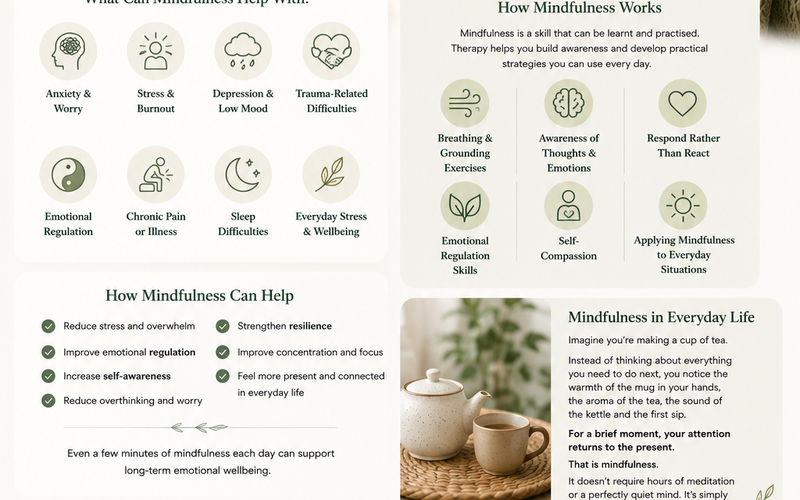
Understanding Mindfulness Based Strategies
Mindfulness is an evidence-based approach that helps you become more aware of your thoughts, emotions and physical sensations without judgement. Learn how mindfulness-based strategies can reduce stress, improve emotional wellbeing and help you respond more calmly to life's challenges.
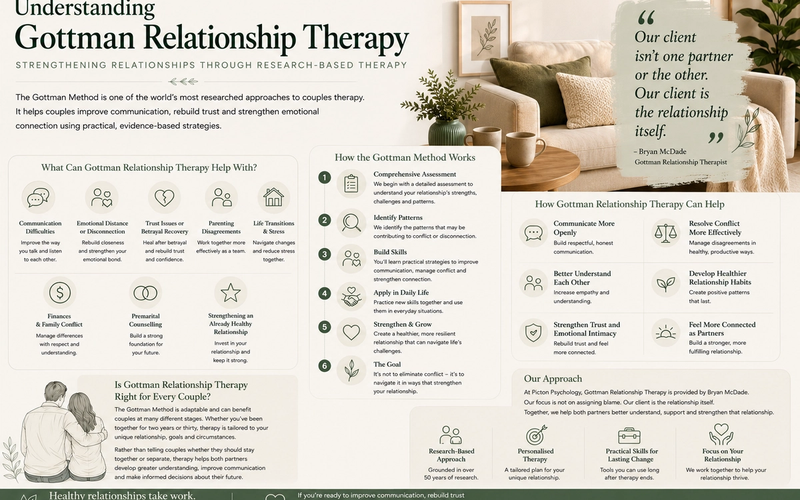
Understanding Gottman Relationship Therapy
The Gottman Method is an evidence-based approach to couples therapy developed from more than 50 years of relationship research. Learn how Gottman Relationship Therapy helps couples improve communication, rebuild trust and strengthen emotional connection.
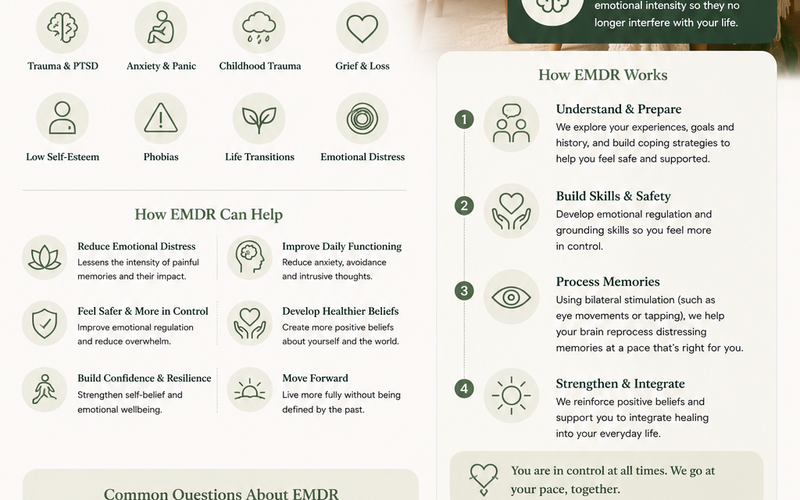
Understanding EMDR Therapy
Eye Movement Desensitisation and Reprocessing (EMDR) is an evidence-based therapy that helps the brain process distressing memories and reduce their emotional impact. Learn how EMDR works, what to expect during treatment and how it can support recovery from trauma and other distressing life experiences.