
Understanding Mindfulness Based Strategies
Mindfulness is an evidence-based approach that helps you become more aware of your thoughts, emotions and physical sensations without judgement. Learn how mindfulness-based strategies can reduce stress, improve emotional wellbeing and help you respond more calmly to life's challenges.

Natalee Zolotas
Director/Practice Manager
Understanding Mindfulness-Based Strategies
Finding Calm in the Present Moment
Our minds naturally spend time thinking about the past or worrying about the future. When life feels stressful or overwhelming, it can become easy to get caught in a cycle of overthinking, self-criticism or emotional reactivity.
Mindfulness helps gently bring your attention back to the present moment.
Rather than trying to stop your thoughts, mindfulness teaches you to notice them with curiosity and compassion, allowing you to respond more thoughtfully instead of reacting automatically.
What is mindfulness?
Mindfulness is the practice of paying attention to the present moment with openness and without judgement.
It involves becoming more aware of your thoughts, emotions, physical sensations and surroundings, rather than becoming caught up in them.
Mindfulness is not about "emptying your mind" or always feeling calm. Instead, it helps you notice what is happening in the present moment and respond in ways that support your wellbeing.
What can mindfulness help with?
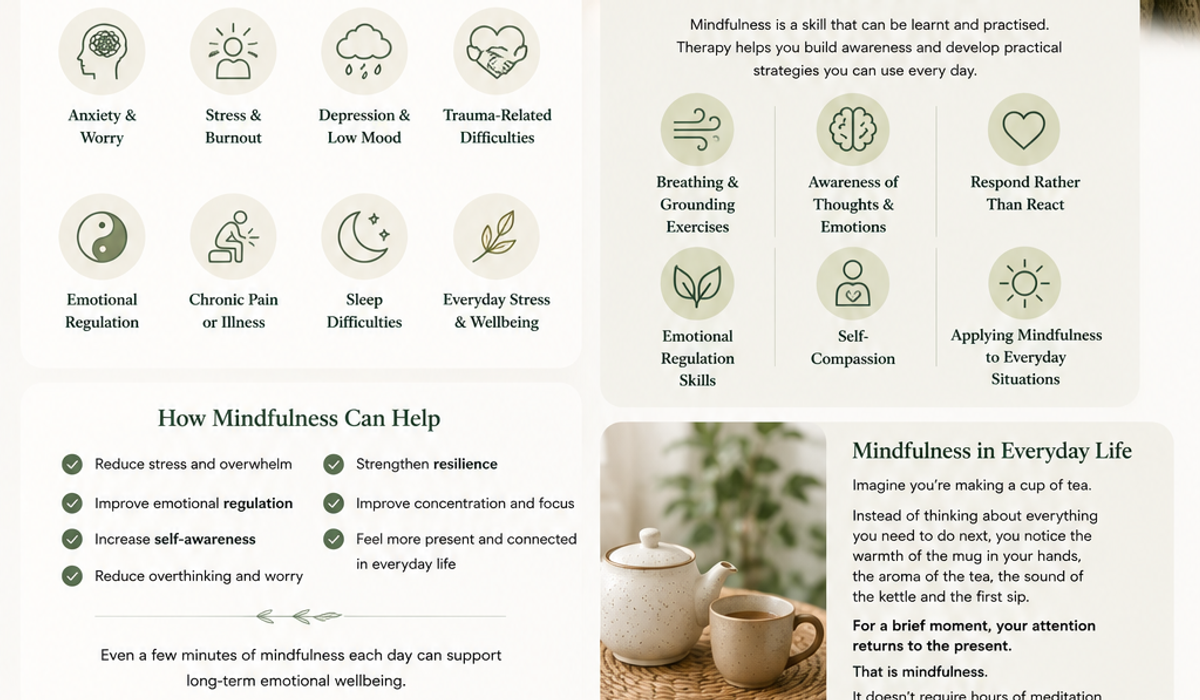
Mindfulness-based strategies are commonly used to support people experiencing:
- Anxiety and excessive worry
- Stress and burnout
- Depression and low mood
- Trauma-related difficulties
- Emotional regulation challenges
- Chronic pain or illness
- Sleep difficulties
- Everyday stress and wellbeing
Mindfulness can be adapted to suit people from all walks of life and is often integrated with other evidence-based therapies.
What happens during mindfulness-based therapy?
Mindfulness is introduced gradually and in ways that feel comfortable for you.
Your clinician may guide you through simple exercises that help you become more aware of your thoughts, emotions and physical sensations while developing practical skills you can use in everyday life.
Sessions may include:
- Breathing and grounding exercises
- Developing awareness of thoughts and emotions
- Learning to respond rather than react
- Building emotional regulation skills
- Practising self-compassion
- Applying mindfulness to everyday situations
The goal is not to perform mindfulness perfectly, but to develop skills that become more natural over time.
How mindfulness can help
Mindfulness-based strategies may help you:
- Reduce stress and overwhelm
- Improve emotional regulation
- Increase self-awareness
- Reduce overthinking and worry
- Strengthen resilience
- Improve concentration and focus
- Feel more present and connected in everyday life
Even a few minutes of mindfulness each day can support long-term emotional wellbeing when practiced consistently.
Mindfulness is a skill
Like learning any new skill, mindfulness takes practice.
Some days it may feel easier than others, and that's completely normal. The aim isn't to have a perfectly calm mind, but to gently notice when your attention has wandered and bring it back to the present moment.
With time and practice, many people find mindfulness becomes a valuable tool for managing stress, navigating difficult emotions and improving overall wellbeing.
Take the Next Step
If you're feeling overwhelmed, caught in patterns of overthinking or finding it difficult to slow down, mindfulness-based strategies may help.
Our clinicians incorporate mindfulness into therapy where appropriate, helping you develop practical skills that support emotional wellbeing and resilience in everyday life.
Keep reading
All articles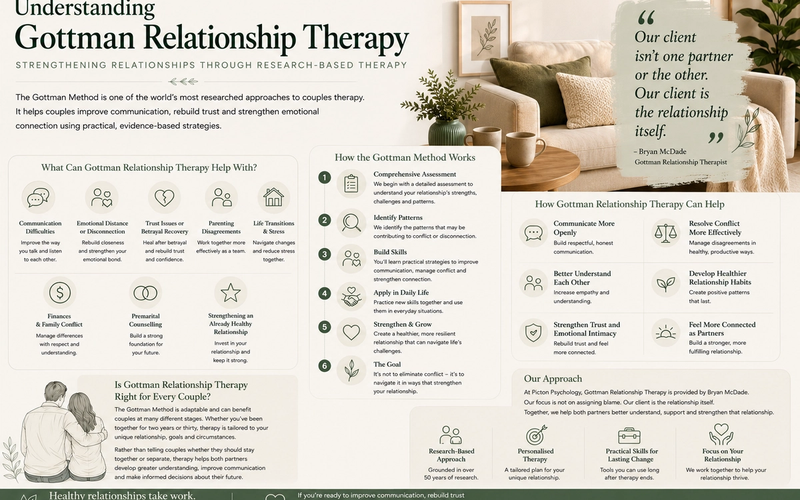
Understanding Gottman Relationship Therapy
The Gottman Method is an evidence-based approach to couples therapy developed from more than 50 years of relationship research. Learn how Gottman Relationship Therapy helps couples improve communication, rebuild trust and strengthen emotional connection.
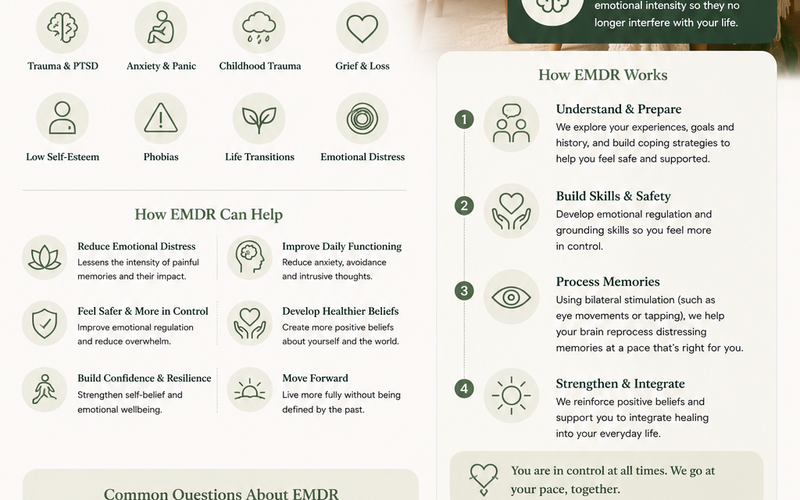
Understanding EMDR Therapy
Eye Movement Desensitisation and Reprocessing (EMDR) is an evidence-based therapy that helps the brain process distressing memories and reduce their emotional impact. Learn how EMDR works, what to expect during treatment and how it can support recovery from trauma and other distressing life experiences.
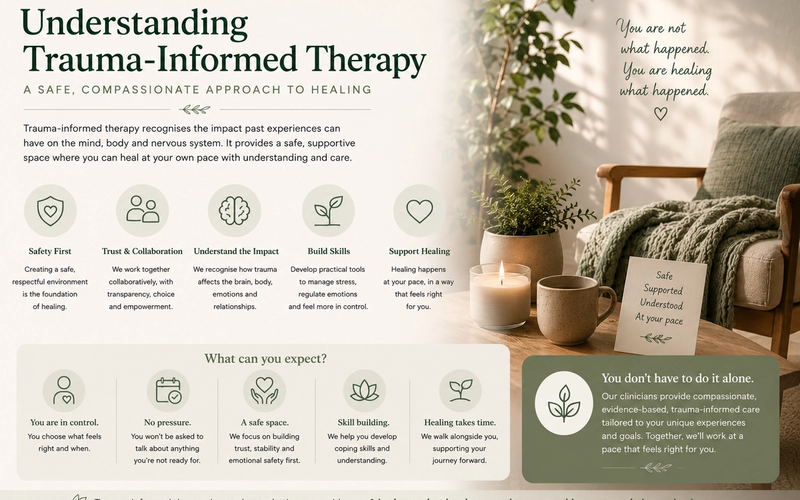
Understanding Trauma Informed Therapy
Trauma-informed therapy is an evidence-based approach that recognises the lasting effects trauma can have on the mind, body and nervous system. Learn how trauma-informed therapy creates a safe, supportive environment for healing using personalised, evidence-based treatment.