
Understanding EMDR Therapy
Eye Movement Desensitisation and Reprocessing (EMDR) is an evidence-based therapy that helps the brain process distressing memories and reduce their emotional impact. Learn how EMDR works, what to expect during treatment and how it can support recovery from trauma and other distressing life experiences.
Picton Psychology
Understanding EMDR Therapy
Helping the Brain Process Difficult Experiences
Difficult or traumatic experiences can sometimes become "stuck," continuing to affect the way we think, feel and respond long after the event has passed.
Eye Movement Desensitisation and Reprocessing (EMDR) is an evidence-based psychological therapy that helps the brain process these experiences, allowing distressing memories to become less overwhelming over time.
EMDR has been extensively researched and is recognised internationally as an effective treatment for trauma and Post-Traumatic Stress Disorder (PTSD).
What is EMDR?
EMDR is a structured psychological therapy that helps the brain reprocess distressing memories so they become less emotionally intense.
During EMDR, your clinician guides you through a series of structured exercises while using bilateral stimulation, such as guided eye movements, tapping or alternating sounds.
Although the memory remains, the emotional distress associated with it often reduces, allowing you to respond to it in a healthier and less overwhelming way.
What can EMDR help with?
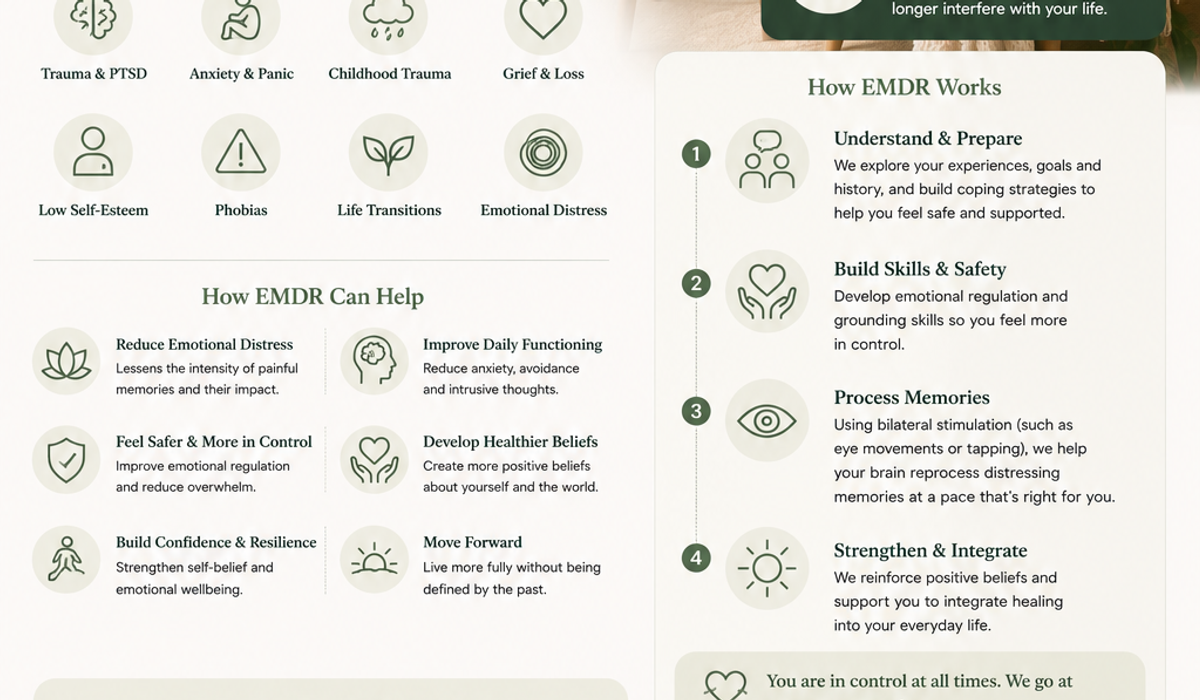
EMDR is most commonly used to support people experiencing:
- Trauma and PTSD
- Childhood trauma
- Anxiety and panic
- Distressing life experiences
- Grief and loss
- Low self-esteem linked to past experiences
- Phobias
- Ongoing emotional distress following significant life events
Your clinician will determine whether EMDR is appropriate for your individual circumstances and treatment goals.
What happens during EMDR?
Many people are surprised to learn that EMDR is not simply talking about traumatic experiences.
Before processing memories, your clinician will work with you to build emotional regulation skills, develop coping strategies and ensure you feel safe and supported.
Treatment typically includes:
- Understanding your experiences and goals
- Learning emotional regulation techniques
- Building coping skills and emotional safety
- Processing memories at a pace that feels manageable
- Strengthening positive beliefs about yourself
EMDR is always tailored to your individual needs, and you remain in control throughout the process.
How EMDR can help
EMDR may help you:
- Reduce the emotional impact of traumatic memories
- Feel less overwhelmed by reminders of past experiences
- Improve emotional regulation
- Reduce anxiety and avoidance
- Build confidence and resilience
- Develop healthier beliefs about yourself
- Move forward without feeling defined by the past
The goal of EMDR is not to erase memories, but to reduce the distress they cause so they no longer interfere with your everyday life.
Is EMDR right for everyone?
EMDR can be highly effective, but it is not the right approach for everyone or every stage of therapy.
Some people benefit from first developing emotional regulation skills before beginning trauma processing. Others may find another evidence-based therapy better suited to their needs.
At Picton Psychology, your clinician will work collaboratively with you to determine the most appropriate treatment plan based on your goals, experiences and readiness for therapy.
Common Questions About EMDR
Will I have to relive my trauma?
No. While EMDR involves recalling difficult memories, you won't be expected to relive them in detail or share every aspect of what happened.
Your clinician will work at a pace that feels safe and manageable, ensuring you have the coping skills and emotional support needed throughout the process. You remain in control during every stage of therapy, and treatment can be paused at any time if needed.
Take the Next Step
If past experiences continue to affect your wellbeing, EMDR may be an effective part of your recovery.
Our clinicians provide evidence-based, trauma-informed care and will work with you to determine whether EMDR is appropriate for your individual needs. Together, we'll support your recovery at a pace that feels safe, collaborative and respectful.'
Keep reading
All articles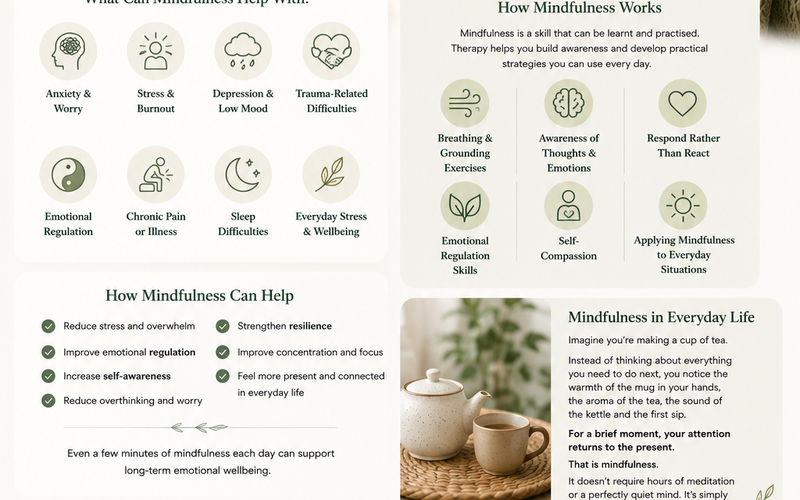
Understanding Mindfulness Based Strategies
Mindfulness is an evidence-based approach that helps you become more aware of your thoughts, emotions and physical sensations without judgement. Learn how mindfulness-based strategies can reduce stress, improve emotional wellbeing and help you respond more calmly to life's challenges.
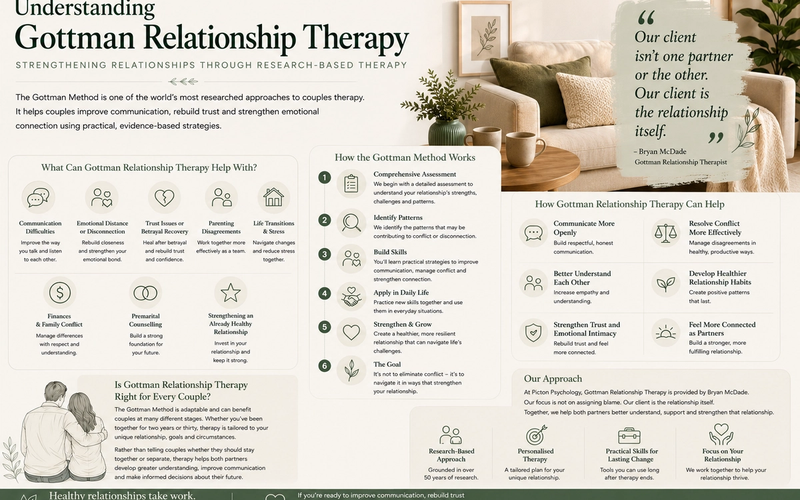
Understanding Gottman Relationship Therapy
The Gottman Method is an evidence-based approach to couples therapy developed from more than 50 years of relationship research. Learn how Gottman Relationship Therapy helps couples improve communication, rebuild trust and strengthen emotional connection.
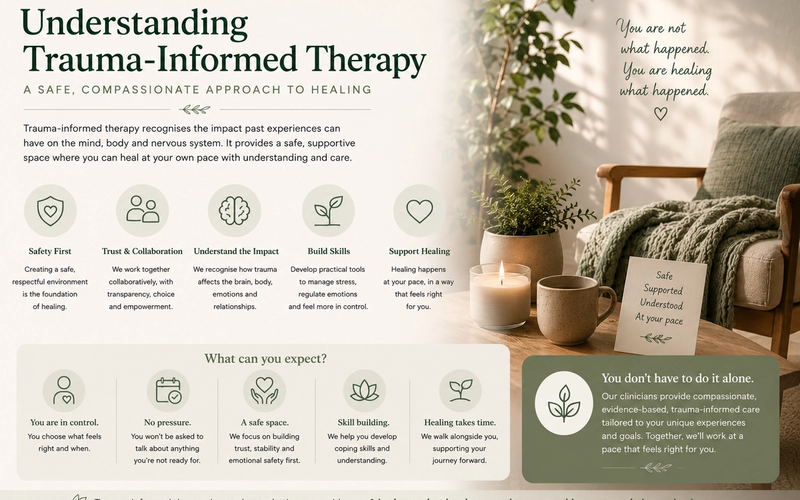
Understanding Trauma Informed Therapy
Trauma-informed therapy is an evidence-based approach that recognises the lasting effects trauma can have on the mind, body and nervous system. Learn how trauma-informed therapy creates a safe, supportive environment for healing using personalised, evidence-based treatment.