

Understanding Long Term Mental Health Conditions
Some mental health conditions can persist for months or years, affecting daily life, relationships and overall wellbeing. Learn what long-term mental health conditions are, why they develop, and how evidence-based therapy can help you manage symptoms and improve your quality of life.

Lisa Arnold
Clinical Psychologist & Director

Understanding Long-Term Mental Health Conditions
When Mental Health Challenges Persist
Everyone experiences emotional ups and downs, but for some people, mental health challenges last much longer or become more complex over time. Living with a long-term mental health condition can feel overwhelming, but with the right support, many people learn to manage their symptoms and live meaningful, fulfilling lives.
What are long-term mental health conditions?
Long-term or complex mental health conditions are conditions that continue to affect a person's thoughts, emotions, behaviours or daily functioning over an extended period. Symptoms may fluctuate over time, with periods of improvement and times when additional support is needed.
These conditions are not a reflection of personal weakness. They develop through a combination of biological, psychological and environmental factors.
Common signs
Long-term mental health conditions may affect different areas of life, including:
- Persistent feelings of anxiety, sadness or emotional distress
- Difficulty managing emotions or coping with stress
- Challenges with relationships, work or study
- Feeling overwhelmed by everyday tasks
- Changes in sleep, energy or motivation
- Feeling stuck despite trying to make positive changes
Everyone's experience is unique, and symptoms can vary from person to person.
Why do some conditions become long-term?
There is rarely one single cause. Mental health is influenced by many factors, including genetics, early life experiences, physical health, ongoing stress, significant life events and access to support.
For some people, symptoms improve with treatment. Others may experience periods where symptoms return, particularly during stressful times. This doesn't mean recovery isn't possible, it simply means that mental health, like physical health, sometimes requires ongoing care.
How therapy can help
Evidence-based therapy can help you better understand your experiences, develop practical coping strategies, improve emotional regulation and strengthen resilience. Therapy also provides a safe, supportive space to work towards goals that are important to you.
At Picton Psychology, treatment is tailored to your individual needs and may include Cognitive Behavioural Therapy (CBT), Acceptance and Commitment Therapy (ACT), Eye Movement Desensitisation and Reprocessing (EMDR), mindfulness-based strategies and other evidence-based approaches.
Many people find that, while symptoms may not disappear overnight, therapy helps them feel more in control, improve their relationships and build a more fulfilling life.
Take the Next Step
If you've been struggling with your mental health for some time, you don't have to manage it alone. Seeking support is a positive step towards understanding your experiences, developing effective coping strategies and improving your wellbeing.
Our clinicians provide compassionate, evidence-based care tailored to your individual needs. Whether you're ready to book an appointment or simply have questions about where to start, we're here to help.
Keep reading
All articles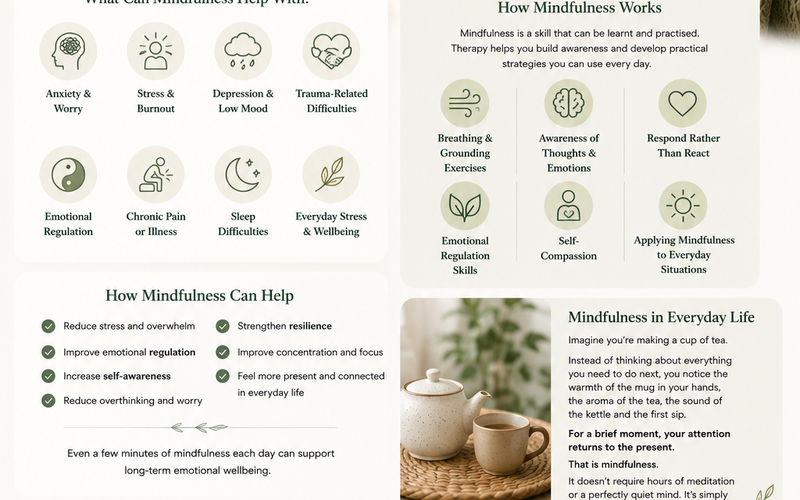
Understanding Mindfulness Based Strategies
Mindfulness is an evidence-based approach that helps you become more aware of your thoughts, emotions and physical sensations without judgement. Learn how mindfulness-based strategies can reduce stress, improve emotional wellbeing and help you respond more calmly to life's challenges.
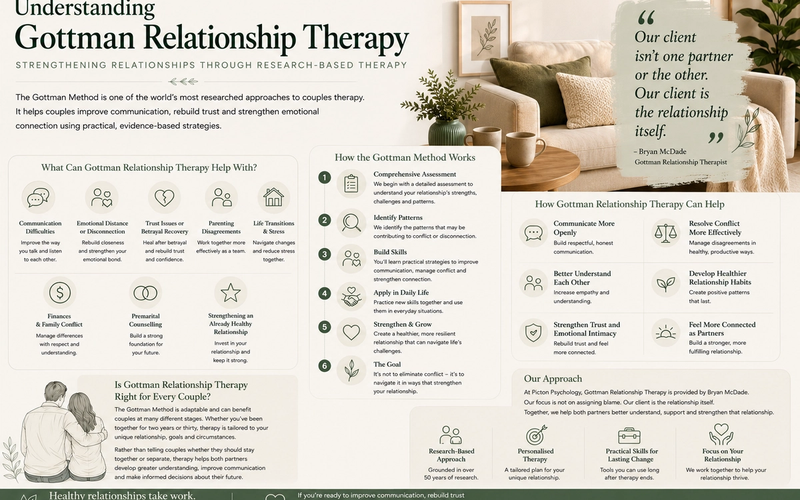
Understanding Gottman Relationship Therapy
The Gottman Method is an evidence-based approach to couples therapy developed from more than 50 years of relationship research. Learn how Gottman Relationship Therapy helps couples improve communication, rebuild trust and strengthen emotional connection.
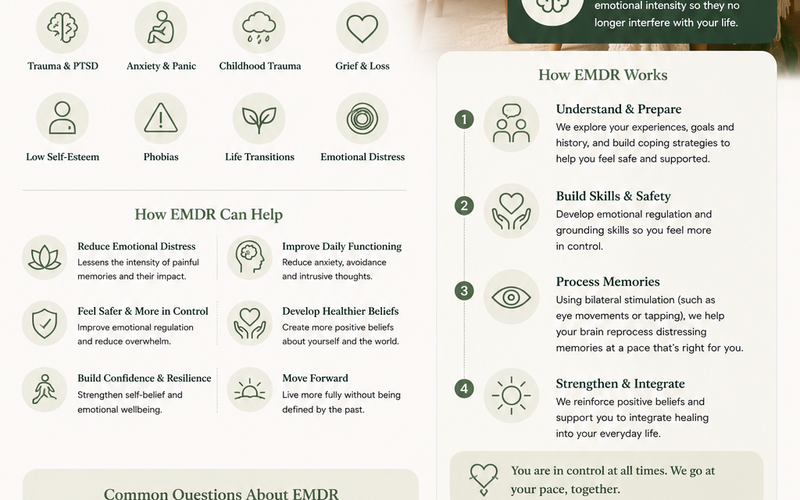
Understanding EMDR Therapy
Eye Movement Desensitisation and Reprocessing (EMDR) is an evidence-based therapy that helps the brain process distressing memories and reduce their emotional impact. Learn how EMDR works, what to expect during treatment and how it can support recovery from trauma and other distressing life experiences.